
A generator is the heartbeat of your facility’s power security. While all rotating machinery produces some level of vibration, excessive shaking is a distress signal that you cannot afford to ignore. It is not just a nuisance; it is a precursor to failure. Left unchecked, abnormal vibration can shatter bearings, crack welds, loosen electrical connections, and ultimately lead to a catastrophic breakdown—often right when you need power the most.
Many facility managers wait until the problem is audible or visible before acting. By then, the damage is often done. A professional Generator Vibration Analysis service allows you to move from reacting to symptoms to preventing disasters. This advanced diagnostic technique lets you “listen” to the internal health of your equipment, identifying specific mechanical and electrical faults long before they result in downtime. Here is why your generator might be vibrating and why calling for an analysis service is the smartest maintenance move you can make.
Decoding the Shake: Common Causes of Excessive Vibration
Excessive vibration is rarely random; it is a specific symptom of an underlying mechanical or electrical flaw. A professional analysis breaks down the vibration signature to pinpoint the root cause.
Mechanical Imbalance: This is the most common culprit. If the generator’s rotor, flywheel, or cooling fan is not perfectly balanced, it creates a centrifugal force that shakes the entire unit. Over time, dirt accumulation or wear can throw a perfectly balanced component out of sync.
Misalignment: The engine and the alternator must be perfectly aligned. If they are even a fraction of a millimeter off, the coupling between them endures immense stress, generating severe vibration that can destroy bearings and seals.
Loose Components or Soft Foot: Over thousands of hours of operation, mounting bolts can loosen, or the foundation itself can settle unevenly (a condition known as “soft foot”). This lack of rigidity amplifies normal operational vibrations into dangerous shaking.
Electrical Faults: Vibration isn’t always mechanical. Electrical imbalances, such as a shorted rotor turn or an uneven air gap between the rotor and stator, can create magnetic forces that pull the rotor unevenly, causing a distinct “humming” vibration.
The Power of Predictive Maintenance
A Generator Vibration Analysis service is the cornerstone of predictive maintenance. Unlike preventive maintenance, which replaces parts on a schedule whether they need it or not, predictive maintenance uses data to tell you exactly what is wrong and when to fix it.
By analyzing the frequency and amplitude of vibrations, technicians can predict failures months in advance. For example, a specific vibration frequency might indicate that a bearing is in the early stages of wear. This insight allows you to schedule a repair during a planned outage rather than suffering an emergency shutdown during a critical power failure.
How the Analysis Service Works
When you hire a professional service, you aren’t just getting a technician with a wrench; you are getting a diagnostic expert armed with sophisticated technology.
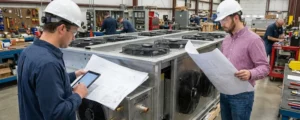
Data Collection: Technicians place sensitive accelerometers and vibration sensors at key points on the generator—typically on the bearing housings and the frame. These sensors record the machine’s movement in three dimensions: vertical, horizontal, and axial.
Spectrum Analysis: The raw data is converted into a spectrum plot (FFT). This “fingerprint” reveals the specific frequencies at which the generator is vibrating. Since different faults (like misalignment vs. bearing defects) vibrate at different frequencies, this data identifies the exact problem.
Phase Analysis: Technicians measure how different parts of the machine are moving relative to each other. This is critical for distinguishing between problems that look similar, such as imbalance and looseness.
Reporting and Action Plan: You receive a detailed report not just of the data, but of the health of your asset. The report will recommend specific actions—like “re-align the shaft” or “replace the drive-end bearing”—allowing you to perform targeted, cost-effective repairs.
Why "Wait and See" is a Costly Strategy
Ignoring a vibrating generator is a financial gamble. The vibration itself consumes energy, reducing fuel efficiency. More importantly, it accelerates wear on every connected component. A minor misalignment issue that could be fixed with a simple adjustment today can lead to a shattered coupling and a destroyed alternator tomorrow.
Investing in a Generator Vibration Analysis service is an investment in reliability. It gives you the confidence that your backup power system is not just running, but running smoothly, efficiently, and ready for any emergency.
Frequently Asked Questions (FAQ's)
What are the most common signs that my generator needs vibration analysis?
Visible shaking, loosening of fasteners, unusual noise (humming or rattling), and overheating bearings are all clear signs. However, vibration analysis can detect issues long before these physical symptoms appear.
How does vibration analysis detect internal generator problems?
Different faults vibrate at different specific frequencies. By analyzing the “vibration spectrum,” technicians can identify unique signatures for problems like bearing wear, gear defects, or electrical imbalance that are impossible to see with the naked eye.
Can vibration analysis tell if the problem is mechanical or electrical?
Yes. Mechanical issues like imbalance typically appear at the generator’s running speed (1X RPM), while electrical issues often appear at twice the line frequency (e.g., 100Hz or 120Hz). An expert analyst can easily distinguish between the two.
Does the generator need to be running for the analysis?
Yes, the generator must be running, typically under load, to capture accurate vibration data. This allows the sensors to measure how the machine responds to operational stresses.
How often should I schedule a generator vibration analysis?
For critical backup generators, an annual analysis is recommended as part of a comprehensive maintenance plan. For prime power units running continuously, quarterly or even continuous monitoring is advisable.
Can vibration analysis prevent bearing failures?
Absolutely. It is the most effective tool for this. It can detect the early stages of bearing fatigue (like microscopic pitting) months before the bearing actually fails, allowing for a planned, inexpensive replacement.
What is “soft foot” and how does it cause vibration?
“Soft foot” occurs when one of the generator’s mounting feet does not sit flat on the base, similar to a wobbly table. Tightening the bolt distorts the frame, causing internal misalignment and high vibration levels.
Is vibration analysis expensive?
Compared to the cost of a catastrophic generator failure, emergency repairs, and facility downtime, the cost of a Generator Vibration Analysis service is negligible. It is a cost-saving measure that extends the life of your expensive equipment.