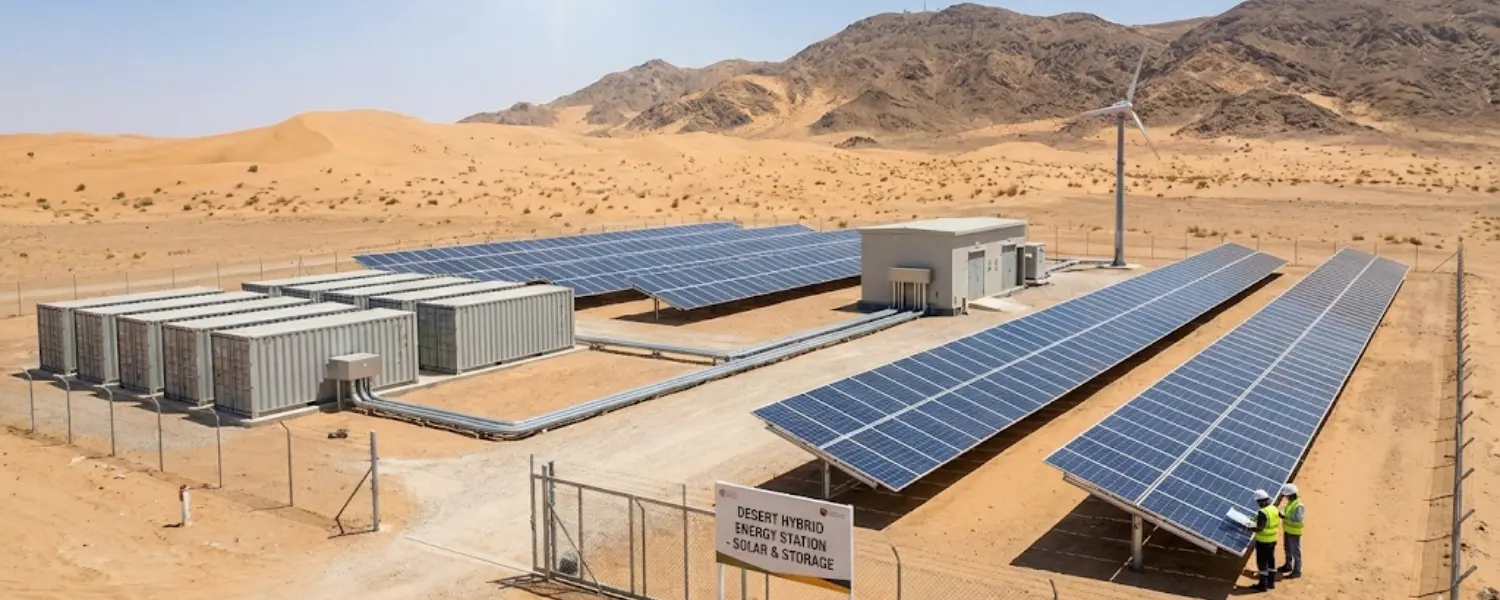
Desert environments represent a paradox in the renewable energy sector. On one hand, they offer the world’s highest solar irradiance levels, providing a near-infinite source of clean power. On the other, they present some of the harshest operating conditions on Earth, characterized by scorching temperatures, abrasive sandstorms, and extreme day-night thermal cycling. To harness this immense potential while mitigating the environmental risks, standard photovoltaic setups often fall short. This is where hybrid solar solutions emerge as the definitive answer for energy security in arid regions.
By integrating photovoltaic (PV) generation with robust battery energy storage systems (BESS) and backup generators, hybrid architectures bridge the gap between intermittent sunlight and the need for reliable, continuous power. Below, we explore the critical benefits of deploying these advanced systems in desert climates.
1. Uninterrupted Power During Sandstorms and Nightfall
The primary challenge of solar energy is intermittency. In desert climates, this is compounded by frequent sandstorms which can blot out the sun for hours or even days, significantly dropping energy production. A standard grid-tied system would fail to provide power during these outages if the grid goes down.
Hybrid solar solutions solve this by incorporating high-capacity battery storage. During peak sunlight hours, the system charges the batteries. When a sandstorm hits or night falls, the system seamlessly switches to stored energy. For critical industrial applications, these hybrid systems can also integrate with diesel generators to provide a tertiary layer of redundancy, ensuring 100% uptime regardless of weather conditions.
2. Overcoming Infrastructure Gaps in Remote Locations
Deserts are often vast, uninhabited expanses with little to no existing electrical grid infrastructure. Extending transmission lines to these remote areas is prohibitively expensive and logistically difficult.
Hybrid systems are essentially self-contained microgrids. They enable mining operations, agricultural outposts, and remote telecommunications towers to operate entirely off-grid. By removing the reliance on distant utility companies, hybrid solar solutions provide energy independence, allowing development and operations to commence immediately without waiting for years of infrastructure development.
3. Advanced Thermal Management for Component Longevity
One of the unique aspects of desert-optimized hybrid systems is their engineering. Standard electronics struggle in ambient temperatures that can exceed 45°C (113°F). However, modern hybrid inverters and battery systems designed for arid regions come equipped with advanced thermal management.
For instance, Lithium Iron Phosphate (LiFePO4) batteries used in these solutions often feature liquid cooling or specialized HVAC enclosures to keep cells within optimal operating ranges. This prevents heat degradation—a common killer of battery life in hot climates—ensuring that your investment remains operational for a decade or longer, even in the middle of the Sahara or Mojave.
4. Stabilizing Voltage in Extreme Thermal Cycles
Deserts experience massive temperature swings, often shifting from blistering heat during the day to near-freezing at night. These fluctuations can cause thermal expansion and contraction in electrical components, leading to voltage instability and connection fatigue.
Hybrid solar solutions utilize smart inverters that regulate voltage and frequency in real-time. By buffering the power through the battery system before delivering it to the load, the system ensures a “clean” and stable power supply. This protects sensitive industrial equipment, pumps, and servers from the electrical noise and fluctuations caused by thermal stress on the transmission lines.
5. Reducing Operational Costs (OpEx) and Fuel Dependency
Many desert operations currently rely heavily on diesel generators running 24/7. This is not only expensive due to fuel transport costs but also maintenance-intensive due to dust clogging engine filters.
Implementing a hybrid architecture drastically reduces generator runtime. The solar array carries the load during the day, and batteries handle the night. The generator only runs during rare emergencies or to top off batteries during prolonged low-light periods. This can reduce fuel consumption by up to 80%, slashing operational expenditures and reducing the logistical headache of constant fuel delivery in remote sands.
6. Enhanced Efficiency with Bifacial and Tracking Technology
Desert environments are highly reflective (high albedo). Hybrid solar solutions in these regions often utilize bifacial solar panels, which capture sunlight from both the front and the reflection off the sand on the back.
When combined with single-axis trackers that follow the sun and smart hybrid inverters that optimize this dual-input, energy yield can increase by up to 30% compared to static systems. This excess energy is dumped directly into the hybrid battery banks, ensuring that the storage is fully charged even before the sun reaches its peak, maximizing the utility of the high-irradiation environment.
Frequently Asked Questions (FAQ's)
What makes hybrid solar solutions better than on-grid systems for deserts?
Hybrid systems provide energy independence. Since deserts often lack reliable grid infrastructure, a hybrid setup with battery storage ensures you have power even during grid failures, sandstorms, or at night.
How do extreme desert temperatures affect battery life in hybrid systems?
Heat can degrade batteries, but desert-specific hybrid solutions use advanced thermal management, such as liquid-cooled enclosures or HVAC-integrated containers, to keep batteries at optimal temperatures and ensure longevity.
Can hybrid solar solutions withstand sandstorms?
Yes. The panels are tested for abrasion resistance, and the system relies on stored battery energy to maintain power when dust blocks sunlight. Additionally, equipments are housed in IP65 or higher rated enclosures to prevent dust ingress.
Do I still need a diesel generator with a hybrid solar system?
For critical remote operations, a generator is recommended as a backup. However, the hybrid system will reduce generator usage by 70-90%, using it only for emergencies or to recharge batteries during prolonged bad weather.
What maintenance is required for desert hybrid solar systems?
The primary maintenance is cleaning dust off panels to maintain efficiency. Many modern desert systems use automated dry-cleaning robots. The batteries and inverters generally require minimal maintenance if thermal management systems are working correctly.
Are bifacial solar panels worth it in desert hybrid setups?
Absolutely. Deserts have highly reflective ground surfaces (sand). Bifacial panels capture this reflected light on the rear side, significantly increasing energy generation and charging batteries faster.
How much can I save by switching to a hybrid solution in a remote area?
While the upfront cost is higher, the reduction in diesel fuel logistics, engine maintenance, and fuel consumption often results in a Return on Investment (ROI) of 3 to 5 years, followed by decades of “free” energy.
Is water required to cool the solar panels in these systems?
Generally, no. While water cooling exists, it is scarce in deserts. Most desert hybrid solutions rely on high-heat tolerance panels and air or liquid-cooled battery cabinets that do not consume local water resources.