When your facility’s backup generator fails, the immediate priority is to get it running again. However, there’s a significant difference between a quick fix and a comprehensive generator repair service. A quick fix might solve the immediate problem, but a professional service is a partnership that restores your equipment to peak condition, identifies underlying issues, and safeguards its long-term reliability.
Understanding the process can help you choose the right partner and ensure you receive the best possible value. Here is a client’s guide to what you should expect from a top-tier generator repair service.
Stage 1: The Initial Call and Diagnostic Triage
Your experience begins with the first phone call. A professional service won’t just ask for your location; they will begin the diagnostic process immediately. Be prepared to provide key information:
The make, model, and capacity (kVA) of your generator.
A detailed description of the problem (e.g., “won’t start,” “making a loud noise,” “unstable power output”).
Any alarm codes displayed on the control panel.
An experienced team will use this information for an initial triage, helping them dispatch a technician with the right tools and potential spare parts, which is crucial for an efficient first visit. For an emergency generator repair, this step is vital for a rapid response.
Stage 2: On-Site Inspection and Root Cause Analysis
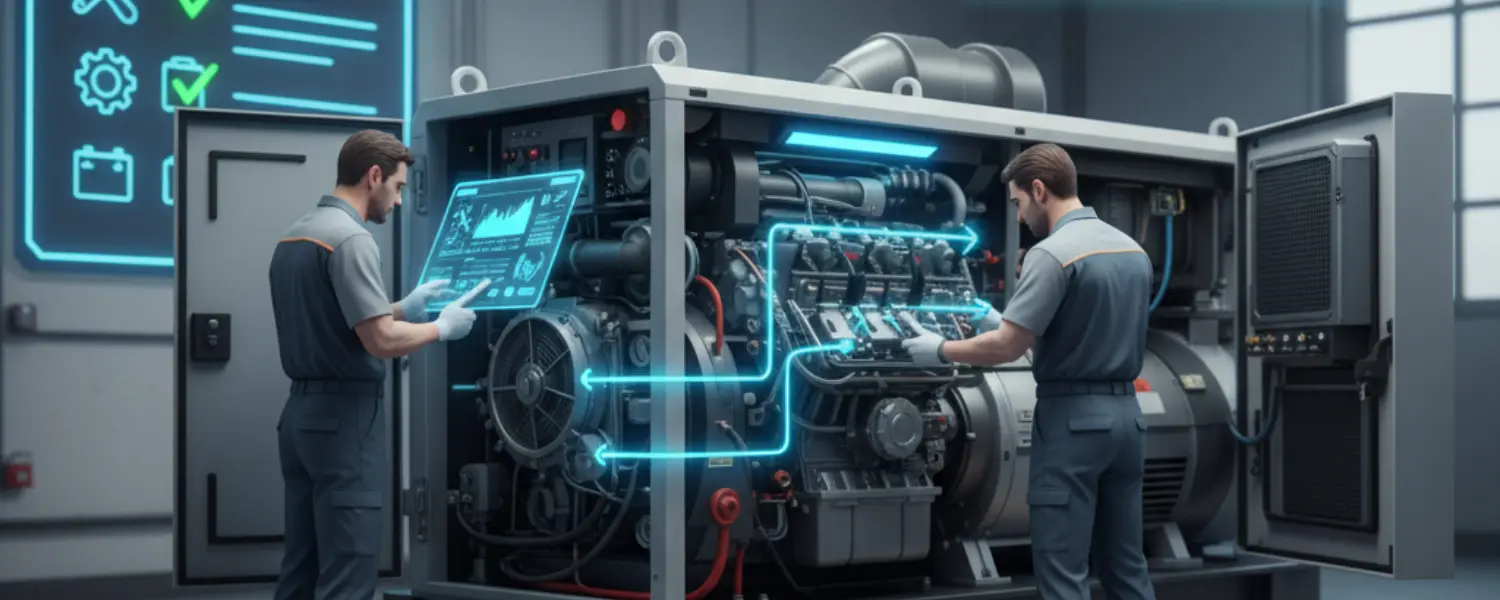
Once the technician arrives, they will conduct a thorough on-site inspection that goes beyond the reported symptom. This is a key differentiator of a comprehensive generator repair service. The goal is not just to fix the obvious issue but to perform a root cause analysis to understand why it failed.
This detailed inspection should include:
Engine and Mechanical Systems: A full check of the engine block, fuel system, cooling system (radiator, hoses), and exhaust.
Electrical Systems: A deep dive into the alternator, voltage regulator, battery and charging system, and all electrical wiring.
Control Panel and Automation: A diagnostic review of the control panel, sensors, and the Automatic Transfer Switch (ATS) to ensure the entire automation sequence is flawless.
Following this analysis, you should receive a transparent, itemized quotation that clearly explains the identified faults, the proposed repair plan, and a breakdown of costs for parts and labor.
Stage 3: The Expert Repair and Overhauling Process
With your approval, the hands-on repair work begins. A truly comprehensive generator repair service has the in-house expertise to handle complex mechanical and electrical issues, ensuring you don’t have to call multiple vendors.
This is where deep technical skill comes into play, covering services such as:
Engine Overhauling: For major issues, this can range from a “top overhaul” (addressing cylinder heads and valves) to a “major overhaul,” which is a complete engine rebuild to restore it to factory specifications.
Alternator Repair and Rewinding: A highly specialized service to repair or completely rewind the alternator to ensure it produces clean, stable power.
Control Panel Repair: Troubleshooting and repairing the complex circuitry, sensors, and logic of the generator’s control panel.
Component Servicing: Expert repair and servicing of critical components like the turbocharger, radiator, and fuel pump to restore peak performance.
Stage 4: Verification Through Rigorous Testing
The job isn’t finished once the parts are replaced. A professional service verifies that the repair was successful and the generator is truly ready for an emergency. The gold standard for this is load bank testing.
A load bank test connects your generator to an artificial load, pushing it to its full rated capacity in a controlled environment. This is the only way to be certain that the generator can handle the stress of a real-world power outage. It verifies the stability of the engine, the cooling system, and the alternator under full operational pressure.
Stage 5: Handover, Reporting, and Future-Proofing
The final stage of a professional generator repair service is a thorough handover. The technician should walk you through the work that was completed, provide a detailed service report for your records, and offer advice on preventing future issues.
This is also the point where a forward-thinking service provider will discuss the benefits of an Annual Maintenance Contract (AMC). An AMC is a proactive plan for scheduled inspections and preventive maintenance. By transitioning from a reactive repair model to a proactive maintenance strategy with a trusted partner, you can significantly reduce the risk of future failures, extend the lifespan of your equipment, and ensure your backup power is always ready when you need it most.
Frequently Asked Questions
What is the difference between generator maintenance and a generator repair service?
Maintenance is a proactive, scheduled service (often part of an AMC) designed to prevent problems. A generator repair service is a reactive service performed to fix a specific fault or failure that has already occurred.
How quickly can I expect a technician for an emergency generator repair?
Reputable service providers offer 24/7 emergency support. The exact response time can vary, but they should be able to provide a clear estimate when you call and prioritize emergencies to get a technician to you as quickly as possible.
Is it more cost-effective to repair an old generator or replace it?
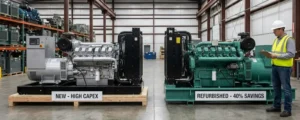
This depends on the nature of the problem. A comprehensive diagnostic from a professional generator repair service can determine the extent of the damage. Often, a major repair or engine overhaul can restore the unit to peak condition for a fraction of the cost of a new generator.
What is a “major engine overhaul”?
A major engine overhaul is an extensive repair where the engine is completely disassembled, inspected, and rebuilt with new or re-machined parts like pistons, rings, and bearings. It’s designed to restore an engine to its original factory specifications and significantly extend its life.
Why is load bank testing necessary after a repair?
Load bank testing is the only way to be 100% certain that the generator can handle its full electrical load under real-world stress. It verifies that the repair was successful and that the entire system—engine, cooling, and alternator—is stable and reliable.
Do you provide a warranty on your generator repair service?
A professional generator repair service should always stand by its work. Reputable companies will offer a warranty on both the parts they supply and the labor they perform, giving you confidence in the quality of the repair.
What information should be in the final service report?
The report should be detailed, listing the initial fault, the diagnostic findings, a complete list of all the repair work performed, the parts that were replaced, and the results of any post-repair testing, such as a load bank test.
How can I prevent the need for frequent generator repairs in the future?
The single most effective way to prevent unexpected failures is to invest in a proactive Annual Maintenance Contract (AMC). Regular, scheduled maintenance from a professional service will identify and address small issues before they can become major, costly repairs.