In the high-stakes world of international infrastructure, the reliability of the electrical grid is non-negotiable. Whether it’s powering a new metro line in Southeast Asia or a solar farm in the Middle East, the project’s success hangs on the integrity of its cabling. This is why sourcing LV, MV, HV cables for export is a matter of profound trust.
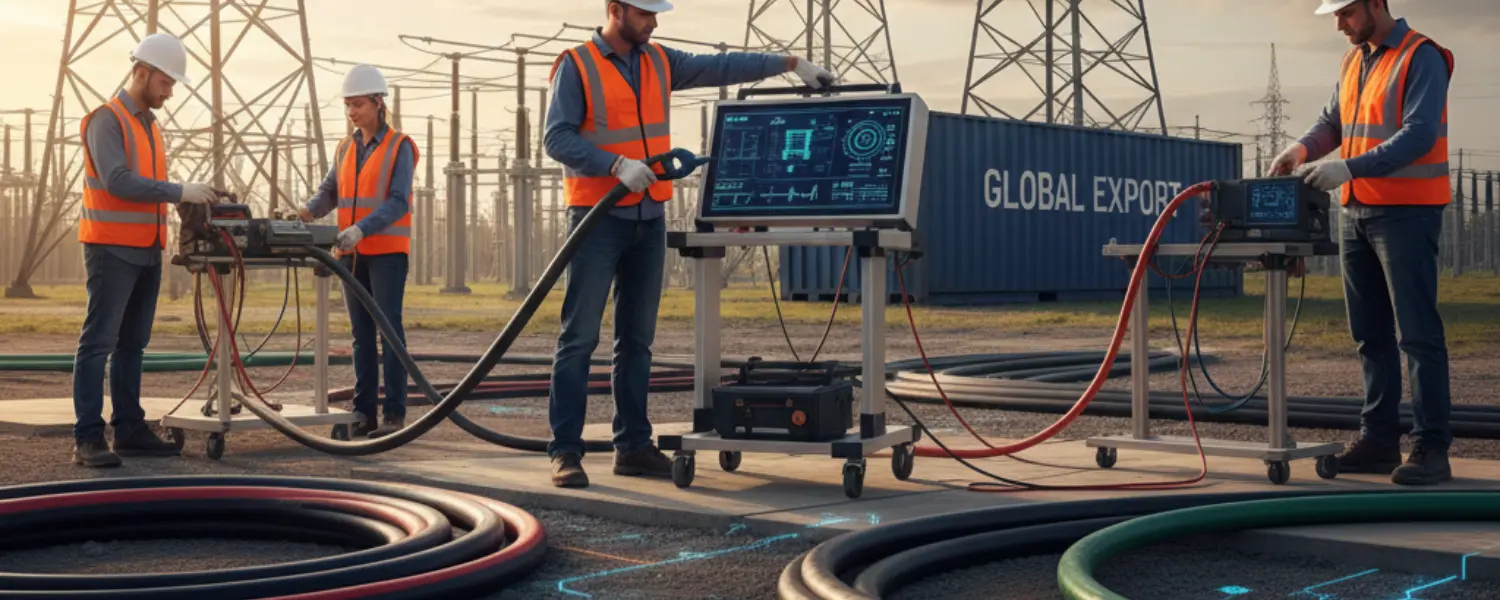
When you choose an LV / MV / HV Cables exporter, you aren’t just buying copper and insulation; you are buying the assurance that these components will survive and perform in some of the world’s harshest environments. To deliver on this promise, top-tier exporters in India don’t just manufacture cables; they subject them to a brutal regimen of testing that goes far beyond standard requirements. Here is a look inside the rigorous testing protocols that define a true export-quality cable.
The Foundation: Routine Tests for Every Meter
Before any cable is considered for export, it must pass a series of fundamental “routine tests.” These are performed on every single length of cable to ensure basic integrity and safety.
Conductor Resistance Test: This verifies that the copper or aluminum conductor meets the specified resistance per kilometer. If the resistance is too high, the cable will overheat and waste energy.
High Voltage Test: Every cable is subjected to a voltage significantly higher than its rated capacity. For an HV cable (High Voltage), this ensures there are no weak points in the insulation that could lead to a catastrophic short circuit.
Insulation Resistance Test: This measures the quality of the insulation material itself, ensuring it effectively contains the electrical current without leakage.
The Torture Chamber: Type Tests for Design Validation
While routine tests check for manufacturing defects, “type tests” are designed to validate the cable’s design against extreme conditions. These are destructive tests performed on samples to prove the cable can withstand the specific stresses of its intended environment.
Thermal Ageing Test: Samples of the insulation are baked in an oven for days to simulate years of service. This ensures the material won’t become brittle and crack over time in hot climates like the Middle East.
Flame Retardancy and Fire Survival: For projects in tunnels or public buildings, safety is paramount. Cables are subjected to direct flame to verify they don’t propagate fire (IEC 60332) and, in some cases, continue to conduct electricity even while burning (IEC 60331).
Water and Moisture Resistance: For MV (Medium Voltage) and HV cables destined for underground or subsea use, samples are immersed in water and subjected to high voltage to ensure the insulation remains impermeable.
Specialized Tests for Global Compliance
The mark of a top LV / MV / HV Cables exporter is their ability to perform specialized tests required by specific international standards.
Partial Discharge Test (for MV/HV Cables): This is a critical test for high-voltage equipment. It detects microscopic imperfections in the insulation that could lead to long-term failure. It is a non-negotiable requirement for modern grid infrastructure.
Smoke Density and Corrosive Gas Emission: In the event of a fire, smoke can be as deadly as the flames. Tests like IEC 61034 measure the density of smoke produced, ensuring it won’t obscure escape routes. Halogen-free cables are tested to ensure they don’t release corrosive gases that could damage sensitive electronic equipment.
Mechanical Stress Tests: Cables are bent, twisted, and pulled to simulate the physical abuse they will endure during installation. This is vital for HV cables, which are often heavy and difficult to maneuver.
The Final Hurdle: Factory Acceptance Tests (FAT)
For large international orders, the testing process culminates in the Factory Acceptance Test (FAT). This is where the client or a third-party inspector visits the factory to witness the testing firsthand. A reputable exporter welcomes this scrutiny. It is the final validation that the LV, MV, and HV cables meet every specification of the purchase order and comply with all relevant standards like IEC 60502 or IEC 60840.
By subjecting their products to this gauntlet of electrical, thermal, and mechanical torture, India’s top exporters ensure that when their cables arrive at your site, they are ready for anything. Sourcing from such a partner guarantees not just a product, but peace of mind for your critical infrastructure.
Frequently Asked Questions (FAQ's)
What is the difference between routine tests and type tests for cables?
Routine tests are performed on 100% of the manufactured cable lengths to check for basic integrity (like conductor resistance). Type tests are destructive tests performed on samples to validate the cable’s design and ability to withstand extreme conditions (like fire or aging).
Why is the Partial Discharge test important for MV and HV cables?
Partial Discharge (PD) testing detects microscopic voids or imperfections within the insulation that can cause gradual deterioration and eventual failure. It is essential for ensuring the long-term reliability of high-voltage cables.
What standards do Indian cable exporters follow?
Top Indian exporters primarily follow IEC (International Electrotechnical Commission) standards, such as IEC 60502 for LV/MV cables and IEC 60840 for HV cables. They can also manufacture to BS (British), VDE (German), and UL (American) standards upon request.
What is a Factory Acceptance Test (FAT)?
A FAT is a final inspection witnessed by the customer or a third-party agency at the manufacturer’s facility before shipment. It verifies that the cables meet all technical specifications and quality standards agreed upon in the contract.
Can Indian exporters supply fire-resistant cables?
Yes, Indian manufacturers produce Fire Survival (FS) cables that are tested to IEC 60331 standards. These cables can continue to operate for a specific period even while subjected to direct fire, making them crucial for safety systems.
How are cables protected during export shipping?
Cables are wound onto robust steel or wooden drums and then lagged (covered) with protective wooden planks or materials to prevent physical damage. The drums are securely lashed inside containers to prevent movement during sea freight.
What is the difference between LV, MV, and HV cables?
LV (Low Voltage) typically refers to cables rated up to 1 kV. MV (Medium Voltage) ranges from 1 kV to 33 kV. HV (High Voltage) refers to cables rated above 33 kV, often up to 132 kV or higher, used for power transmission.
Why is XLPE insulation preferred for export cables?
Cross-Linked Polyethylene (XLPE) is preferred because it offers superior thermal and electrical properties compared to PVC. It can withstand higher operating temperatures (90°C vs 70°C) and has better resistance to short circuits and chemicals.