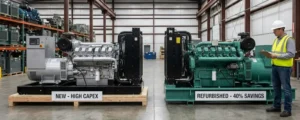
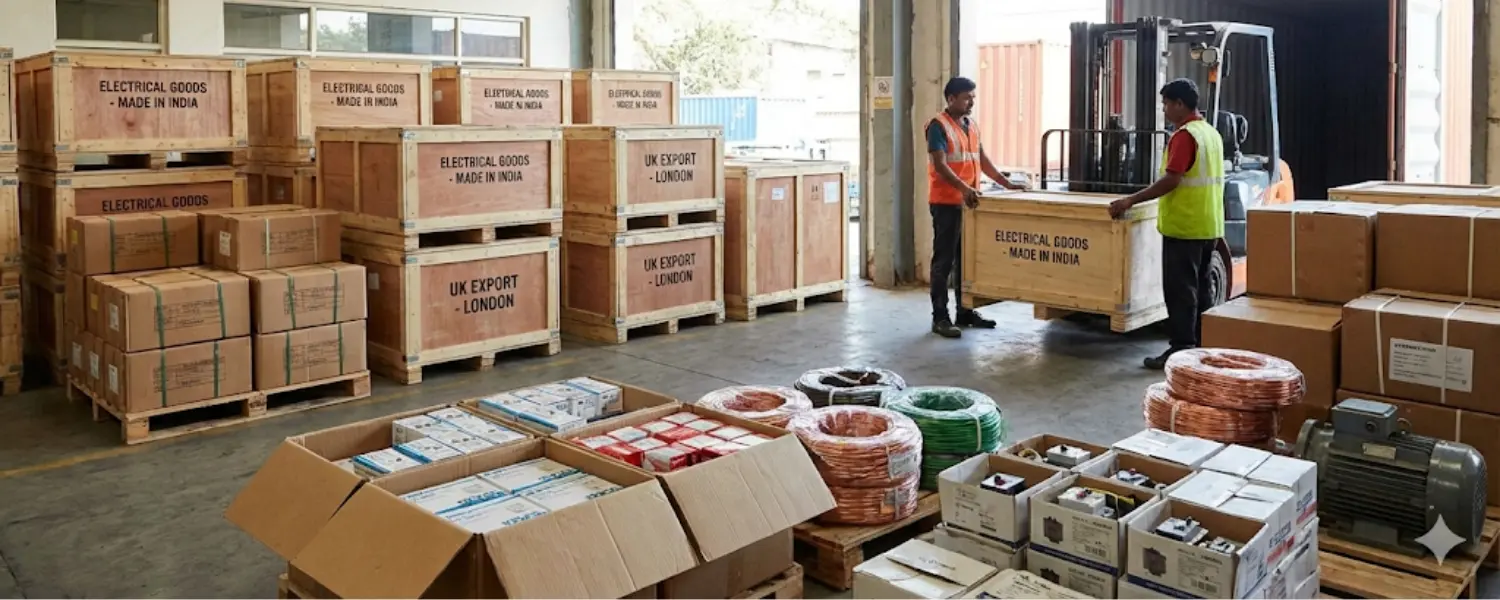
The trade relationship between India and the United Kingdom has entered a historic new phase. With the signing of the India-UK Free Trade Agreement (FTA) in July 2025, the corridor for electrical goods has transformed from a steady stream into a high-speed highway of opportunity. Tariffs on key industrial and consumer electricals have been slashed or eliminated, positioning India as a primary sourcing hub for the British market.
For UK buyers and Indian exporters alike, understanding what is moving across this corridor is crucial. It’s no longer just about basic components; the demand has shifted toward sophisticated, value-added machinery. Here is a breakdown of the top electrical goods driving this trade surge and why they are dominating the market.
1. Electric Motors and Generators
At the forefront of this export boom are electric motors and generators. UK industries are increasingly turning to India for high-efficiency IE3 and IE4 motors to meet stringent environmental standards.
Why the Demand? The UK’s push for industrial decarbonization requires energy-efficient drive systems. Indian manufacturers, leveraging advanced engineering and cost-effective production, are supplying motors that meet global IEC standards at a competitive price point.
Key Products: AC induction motors, high-voltage generators for renewable energy projects, and specialized motors for HVAC systems.
2. Power Transformers and Static Converters
India has established itself as a reliable supplier of heavy electrical infrastructure. The export of transformers, static converters, and inductors reached over $182 million in recent years, a figure set to rise under the new zero-duty regime.
Why the Demand? As the UK upgrades its aging power grid and integrates more renewable energy sources, the need for robust, custom-engineered transformers is growing. Indian exporters offer bespoke engineering capabilities that allow for seamless integration into the UK grid.
Key Products: Distribution transformers, power transformers, and rectifiers for industrial applications.
3. Insulated Wire and Cables
The nervous system of any infrastructure project, insulated wires and cables are a massive export category. From construction to telecommunications, Indian cables are powering UK projects.
Why the Demand? India’s robust domestic supply chain for copper and aluminum, combined with large-scale manufacturing, allows for the production of high-quality cables at scale. The FTA has further sweetened the deal by removing tariffs that previously hindered competitiveness against European suppliers.
Key Products: LV/MV/HV power cables, fiber optic cables, and specialized control cables.
4. Switchgear and Control Panels
Safety and automation are paramount in modern industry, driving significant demand for Indian switchgear and control panels.
Why the Demand? Indian manufacturers excel in producing customized, modular switchgear that meets international safety standards (like IEC 61439). The capability to deliver “smart” IoT-enabled panels aligns perfectly with the UK’s Industry 4.0 evolution.
Key Products: Circuit breakers, voltage limiters, distribution boards, and industrial control panels.
5. Telecom and Networking Equipment
While often categorized separately, telecommunications hardware is a vital subset of electrical goods. India exports over $1 billion worth of telecom apparatus to the UK annually.
Why the Demand? The global shift away from certain single-source suppliers for 5G and networking infrastructure has benefited India. Trusted Indian manufacturers are stepping in to supply critical networking hardware for the UK’s digital infrastructure.
Key Products: Transmission apparatus, antennas, and networking switches.
The Strategic "India Advantage" for UK Buyers
Why are UK companies increasingly choosing India? It’s not just about the new FTA.
Engineering Excellence: India offers a deep pool of skilled English-speaking engineers who ensure that complex technical specifications are understood and met.
Compliance & Standards: Leading Indian exporters are well-versed in UKCA (UK Conformity Assessed) marking and British Standards, ensuring that goods arrive compliant and ready for installation.
Supply Chain Resilience: Partnering with Indian suppliers diversifies supply chains, reducing reliance on other geopolitical regions and ensuring a stable flow of critical components.
The India-UK electrical trade is no longer just transactional; it is a strategic partnership. By leveraging this corridor, businesses can access high-quality, compliant, and cost-effective electrical goods that power the future.
Frequently Asked Questions (FAQ's)
How has the India-UK FTA impacted the export of electrical goods?
The 2025 FTA has eliminated or significantly reduced tariffs on a wide range of electrical machinery, making Indian products like motors, transformers, and cables much more cost-competitive for UK buyers.
Are Indian electrical goods compliant with UK standards?
Yes. Reputable Indian manufacturers produce goods that comply with British Standards and International Electrotechnical Commission (IEC) norms. They are also adapting quickly to the UKCA (UK Conformity Assessed) marking requirements.
What is the advantage of sourcing electric motors from India?
India offers a unique combination of high-quality engineering (meeting IE3/IE4 efficiency standards) and cost-effective production. This provides UK buyers with reliable, energy-efficient motors at a better price point than many other regions.
Can I source custom control panels from India for UK projects?
Absolutely. Indian manufacturers are known for their engineering flexibility. They can design and build bespoke control panels and switchgear tailored to specific UK project requirements and safety codes.
What types of cables are most commonly exported to the UK?
The UK imports a vast array of cables from India, ranging from standard Low Voltage (LV) wires for construction to specialized Medium (MV) and High Voltage (HV) cables for infrastructure and power distribution.
Is logistics a challenge when importing from India to the UK?
No. The trade corridor is well-established with reliable sea and air freight options. Professional export partners in India handle the entire logistics process, including secure packaging and customs documentation, to ensure smooth delivery.
Why are telecom products included in electrical goods exports?
Telecom equipment relies heavily on electrical engineering. India has become a major global hub for manufacturing transmission apparatus and networking gear, which are essential for the UK’s digital infrastructure upgrades.
How do I find a reliable exporter for electrical goods in India? Look for exporters with a proven track record, ISO certifications, and experience in the UK market. A partner like who understands both technical compliance and logistics is invaluable for a seamless experience.