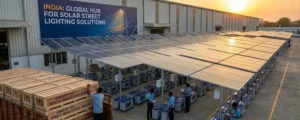
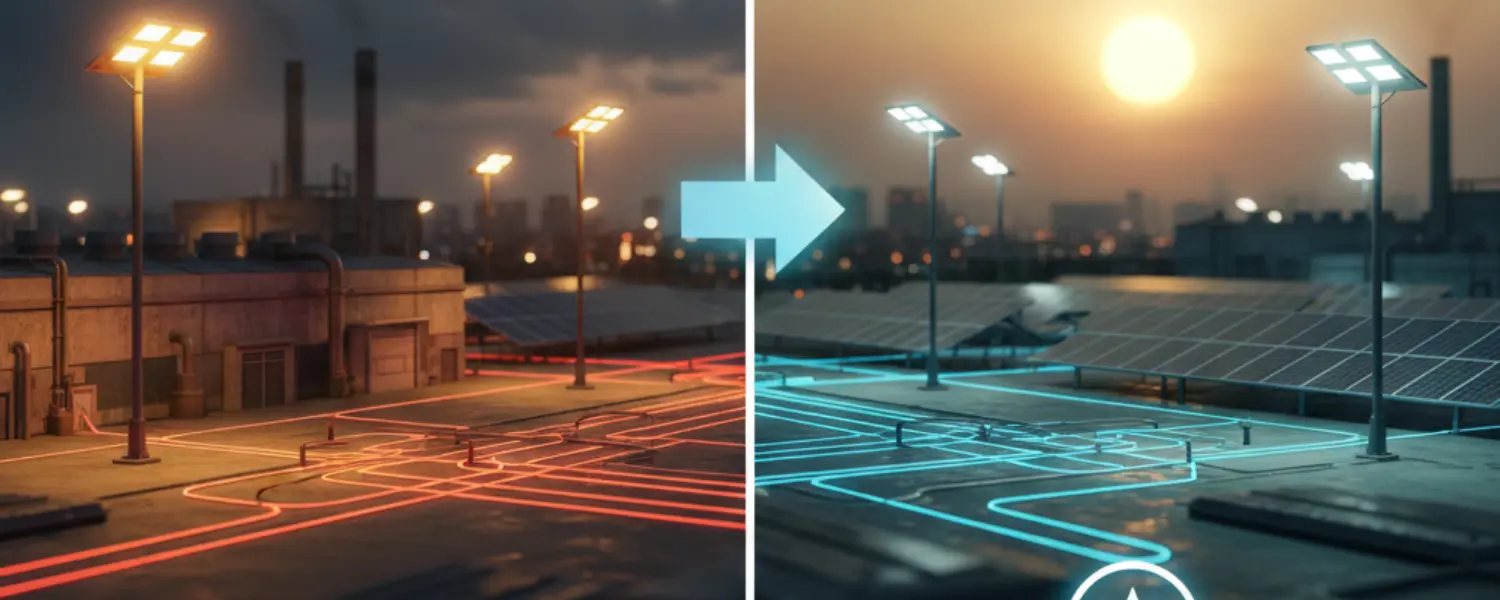
The industrial landscape is evolving rapidly. In a sector historically dominated by high energy consumption and heavy reliance on the grid, a significant shift is underway. Facility managers, faced with rising electricity costs and increasing pressure to meet sustainability targets, are turning to a technology that was once considered niche: solar lighting solutions.
This is not just about being “green.” The switch to industrial solar lighting is driven by hard economic realities and operational advantages. From expansive warehouses and loading bays to remote perimeter fencing, solar lighting is proving to be a reliable, cost-effective, and resilient alternative to traditional grid-tied illumination. Here is why industrial facilities worldwide are making the switch.
1. Slashing Operational Costs and Electricity Bills
The most immediate driver for this switch is the bottom line. Industrial facilities operate 24/7, and lighting can account for a significant portion of their total energy usage. Traditional high-intensity discharge (HID) or grid-tied LED lights, while effective, come with a monthly bill that fluctuates with energy market prices.
Solar lighting solutions sever this tie to the utility grid. By generating and storing their own power on-site, they essentially provide free lighting after the initial investment is recouped. For large facilities with hundreds of outdoor fixtures—in parking lots, roadways, and security perimeters—the cumulative savings can be massive, directly improving the facility’s operational profit margins.
2. Eliminating Expensive Trenching and Infrastructure
Expanding an industrial facility or upgrading security lighting often hits a major roadblock: the cost of infrastructure. Installing new grid-tied lights requires digging trenches, laying copper cables, and installing transformers. This process is not only expensive but also disruptive to daily operations.
Solar lights are self-contained units. They require no underground wiring, no trenching, and no connection to the central electrical panel. This “drop-in” capability allows facility managers to install lighting in remote corners of the property, new parking areas, or temporary construction zones at a fraction of the cost and time of traditional wired systems.
3. Guaranteeing Security and Resilience Against Power Outages
In an industrial setting, lighting is synonymous with security. A power outage that plunges a perimeter fence or a loading dock into darkness is a major security risk, inviting theft or accidents.
Solar lighting solutions operate independently of the grid. They are equipped with battery storage that ensures they continue to shine even during blackouts, brownouts, or grid failures. This resilience is critical for maintaining safety and security protocols, ensuring that surveillance cameras have visibility and security personnel can patrol effectively, regardless of the status of the main power supply.
4. Meeting Sustainability Goals and Carbon Reduction Targets
Sustainability is no longer a “nice-to-have”; it’s a corporate mandate. Industrial companies are under increasing pressure from investors, regulators, and customers to reduce their carbon footprint.
Switching to solar lighting is a highly visible and impactful way to decarbonize operations. It eliminates the indirect emissions associated with grid electricity usage. Furthermore, many governments offer tax incentives, grants, and rebates for installing renewable energy technologies, making the financial case for solar lighting even more compelling.
5. Smart Technology and Automated Efficiency
Modern industrial solar lighting is far more than a panel and a bulb. It is intelligent infrastructure. Advanced systems come integrated with smart controllers and IoT (Internet of Things) connectivity.
These smart features allow for:
Adaptive Lighting: Lights can automatically dim when no motion is detected to conserve battery life and brighten instantly when a worker or vehicle approaches.
Remote Monitoring: Facility managers can track the performance, battery status, and health of every single light fixture from a central dashboard, eliminating the need for manual inspections and enabling proactive maintenance.
By combining energy independence with smart operational control, solar lighting solutions offer industrial facilities a way to future-proof their infrastructure while solving today’s most pressing cost and security challenges.
Frequently Asked Questions (FAQ's)
Are solar lighting solutions bright enough for industrial applications?
Yes. Modern industrial solar lights use high-efficiency LEDs that can produce high-lumen output, equivalent to or better than traditional metal halide or HPS lamps, ensuring excellent visibility for security and operations.
Do solar lights work on cloudy or rainy days?
Absolutely. Quality solar lighting solutions are sized with “autonomy” in mind. They have battery banks capable of storing enough energy to power the light for several nights (typically 3-5 days) without any new solar charge, ensuring reliability in poor weather.
How much maintenance do solar lighting systems require?
They require very little maintenance compared to wired lights. There are no bulbs to change frequently (LEDs last 50,000+ hours), and no wires to corrode. The main maintenance is cleaning the solar panel occasionally and replacing the battery every 5-10 years.
Can solar lights be installed in existing paved parking lots?
Yes, and this is one of their biggest advantages. Since they don’t require trenching for cables, you can install solar poles in an existing paved lot without having to tear up the asphalt or concrete, saving huge amounts of money and disruption.
What is the typical lifespan of an industrial solar lighting system?
The solar panels typically last 20-25 years, the LED fixtures can last 15-20 years, and modern Lithium Iron Phosphate (LiFePO4) batteries generally last 5-10 years before needing replacement.
Are there financial incentives for switching to solar lighting?
Yes, many governments and local municipalities offer tax credits, grants, or rebates for businesses that invest in renewable energy and energy-efficient technologies, which can significantly offset the upfront cost.
How do solar lights improve security at a facility?
They provide reliable illumination that is immune to grid power outages. Additionally, smart solar lights with motion sensors can startle intruders by instantly brightening, and they ensure that CCTV cameras always have enough light to capture clear footage.
Can I control and monitor my solar lights remotely?
Yes, advanced industrial solar lighting solutions can be networked. This allows facility managers to monitor battery levels, dim lights, set schedules, and receive maintenance alerts remotely via a computer or smartphone app.